Choosing a Commutator for Freely Moving Recording
When a freely moving preparation needs a commutator, and how the passive Standard and the motorized PRO differ: torque sensing, channels, Neuropixels ports.
8 min read
Updated November 3, 2026

NeuroNexus · neuronexus.com · Resources
A commutator is the rotating joint in the tether between the headstage and XDAQ, so a freely moving animal can turn without twisting its cable. NeuroNexus offers two: the Standard, a passive mechanical joint the animal's own motion turns, and the Commutator PRO, motorized, with a sensor and a motor that cancel the torque before it reaches the animal, up to four Neuropixels ports, and a passthrough and battery as options.
Research use only. NeuroNexus products and the procedures described here are for non-clinical research use, and must not be used in human or veterinary medical procedures.
Both commutators are engineered and manufactured by Kontex and commercialized by NeuroNexus, as part of the X-Series platform with XDAQ and the X-Series headstages.
Do you need a commutator?#
Only for a freely moving animal on a tether. A head-fixed preparation and a short acute session connect the headstage to the DAQ directly, and most rigs do. A freely moving chronic preparation is different: every time the animal turns, the tether turns with it, and without a joint the twist accumulates in the cable. The animal feels the pull and changes what it does to avoid it, the connector at the head takes the load, and the recording picks up the movement. A commutator lets the cable above the joint turn with the animal while the cable below it stays still.
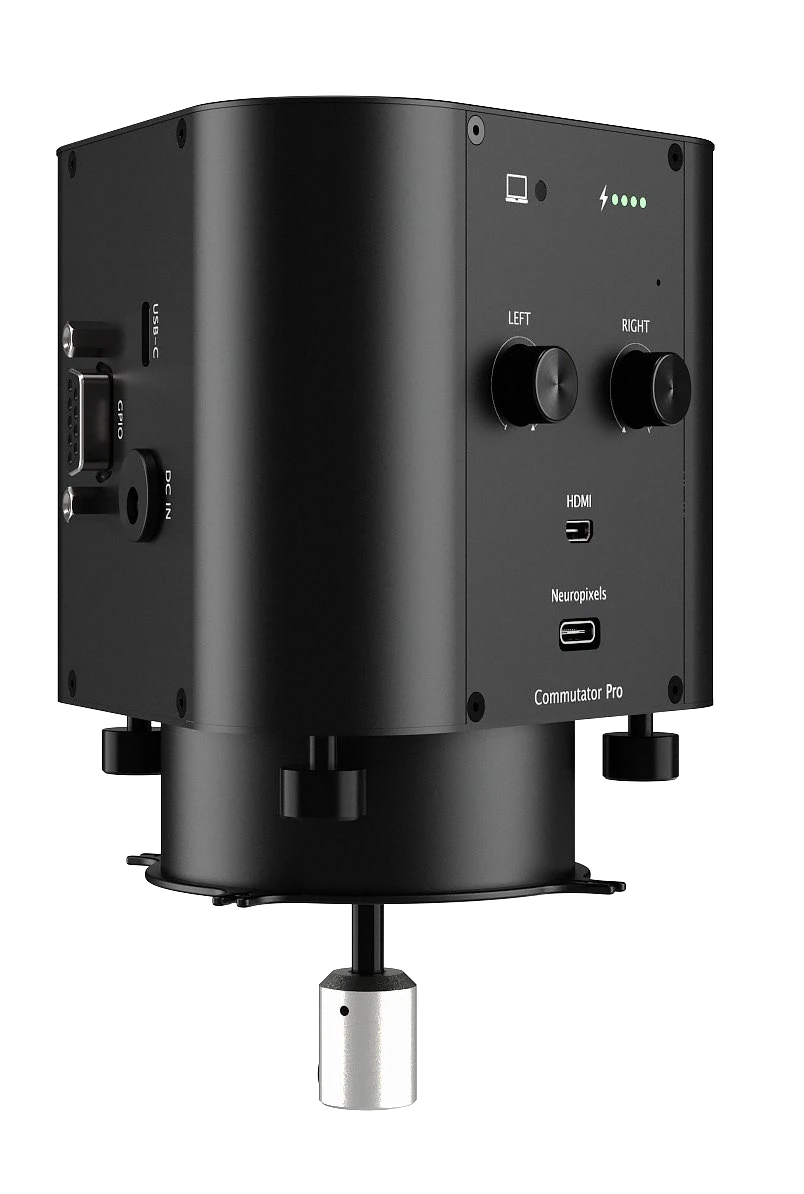
Figure 1. The Commutator PRO: a motorized joint with torque sensing, Neuropixels ports and an HDMI headstage port.
Passive or motorized?#
The Standard Commutator is passive and mechanical. The tether attaches off-center, so the animal's rotation becomes the torque that turns the rotor, and animal-side cable management keeps the slack stored and tidy. It needs no power and no setup: plug in the headstage cable below and the DAQ cable above. The animal supplies the force, which is the right trade for a rat on a passive probe, where the joint turns freely enough that the pull never registers.
The Commutator PRO is motorized. A sensor detects the rotation and an onboard microprocessor drives a low-noise motor to follow it, continuously, so no torque reaches the animal. It is the choice when the pull of the tether would itself be a variable: a mouse, which cannot turn a passive joint without feeling it; a long session; a behavior that must stay natural; and any Neuropixels preparation, because the PRO is the commutator with Neuropixels ports. Left and right rotation can also be driven from the panel or the PC.
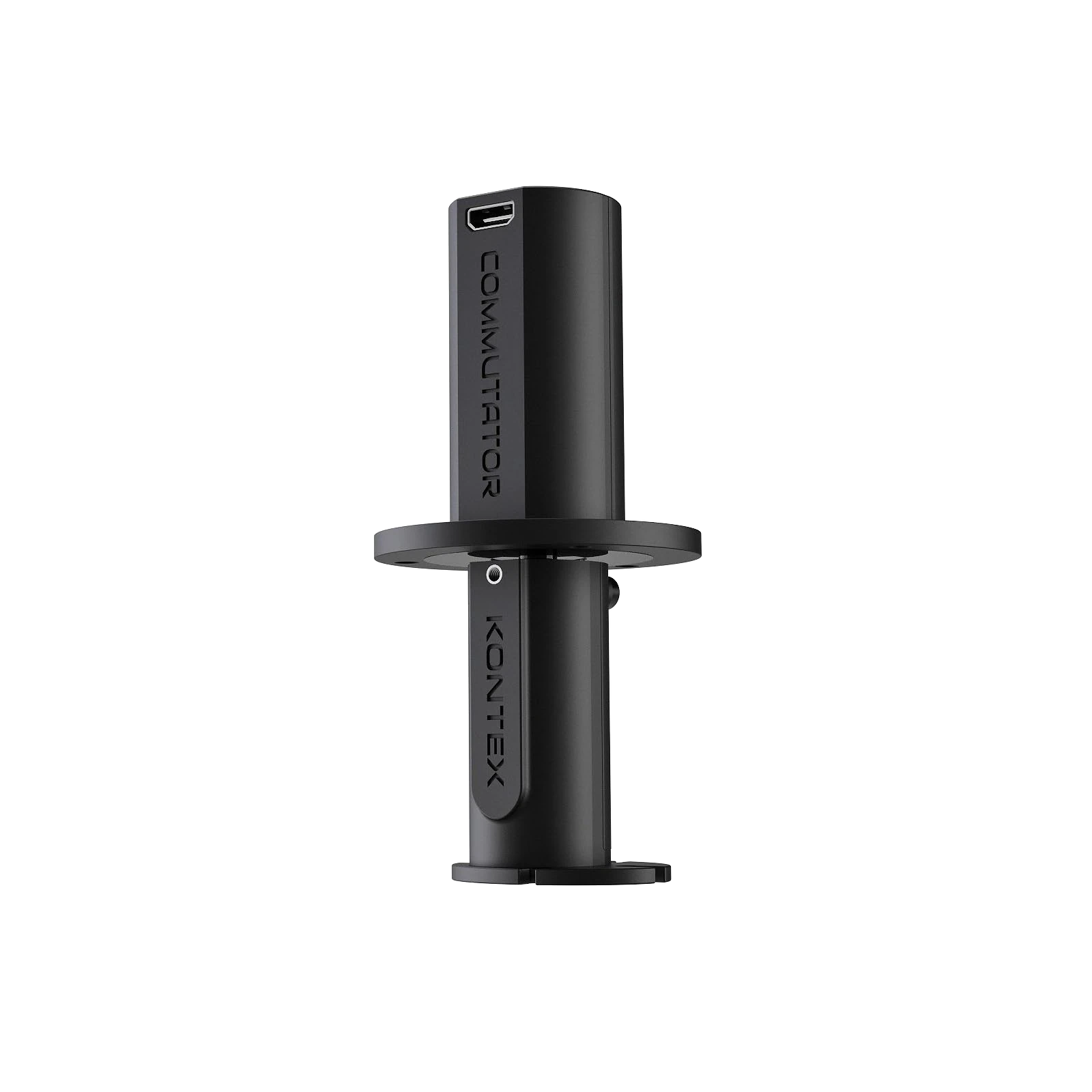
Figure 2. The Standard Commutator: a passive joint with the DAQ connector on top and the headstage connector below.
How is torque sensed?#
The PRO senses rotation one of two ways, and the choice is made at order (torque sensing).
A gyroscope on the animal side reports the turn directly. It rides on a 34 AWG wire bundle under 1 g, or, with a compatible X-Series headstage, its signal travels over the HDMI cable with no separate sensor at all. It is the configuration for Neuropixels and for behavior, where the head carries little and the response must be immediate.
A Hall sensor on the rotor reads a magnetic encoder inside the commutator, so nothing is added to the animal. Its tracking sensitivity and speed are adjustable. It is the configuration for rats and for preparations without Neuropixels, where the torque the animal exerts on the joint is enough to be read at the rotor.
How many channels per cable?#
The commutator passes the headstage's digital data stream, so the channel count per cable depends on the commutator model and on whether the headstage records or records and stimulates. The Standard passes up to 256 channels from a record (XR) headstage and up to 32 from a record-and-stimulate (XSR) headstage. The PRO's one HDMI port carries up to 128 XR or 32 XSR channels in its XH1 configuration, and 64 or 16 in XH2, the configuration Kontex uses when the port also carries Neuropixels or the IMU signal. The headstage decides the rest: a 32-channel headstage uses 32 of them.
Neuropixels#
Kontex sells the Commutator PRO as three models. The Neuropixels Commutator PRO has one, two or four Neuropixels ports, each taking one Neuropixels 1.0 probe or two Neuropixels 2.0 probes. The HDMI Commutator PRO has one HDMI port for an X-Series headstage. The Dual Mode Commutator PRO has the HDMI port and one or two Neuropixels ports beside it. That last model is the one that matters for a circuit study: a Neuropixels probe records through its ports while a passive probe on the HDMI port records or stimulates, on the same rotating joint, in the same animal. The PRO connects over USB-C to XDAQ or to an imec-compatible system and is validated with imec's 5 m and Kontex's 1 m cables. The recording chain, from the probe to analysis, is in Recording Neuropixels on XDAQ. The Standard has HDMI and micro-HDMI connectors for X-Series headstages and no Neuropixels port.
Passthrough, GPIO and battery#
Three options belong to the PRO. A 5 mm passthrough is an open channel through the rotating joint for a fluid line or an optical fiber, so drug delivery or optical stimulation runs during the recording without a second joint in the path. Up to nine GPIO lines carry synchronization and control signals across the joint; with an X-Series headstage the gyro control and the GPIO travel over the same HDMI cable. A 6-hour battery pack runs the motor without wall power, for a behavior suite where a power cable is the noise source or the obstacle. The passthrough and the battery are chosen at order, as part of the configuration.
Mounting and cable management#
The Standard is 42 × 42 × 87 mm, with the box side 4.3 cm high and a 3.2 mm mounting hole, sized for a densely spaced animal rack. The PRO is 99 × 105 × 150 mm and about 825 g; it mounts to the top of a behavior box with the bottom thumb-screws supplied, or hangs from camera hardware through its 1/4-inch screw interface. The Standard carries animal-side cable storage on the joint, so the slack between the animal and the commutator is kept short and off the floor of the arena.
What it connects to#
The commutator sits between the headstage and XDAQ: headstage → commutator → XDAQ CORE2, ONE+ or ALL-IN-ONE. Every X-Series headstage connects to either model, and the Kontex NP Headstage connects to the PRO's Neuropixels ports; Intan headstages and controllers connect to the PRO through adapters. The Connection Finder opened with the commutator pinned lists every headstage and system it connects to, with the cable for each.
Which one?#
| Standard Commutator | Commutator PRO | |
|---|---|---|
| Actuation | passive, mechanical | motorized, active torque compensation |
| Torque sensing | none | gyro on the animal, or Hall sensor on the rotor |
| Models | one, Standard Commutator HDMI | three: Neuropixels, HDMI, Dual Mode |
| Headstage channels, record (XR) | 256 per cable | 128 per cable (64 in the XH2 configuration) |
| Headstage channels, record and stimulate (XSR) | 32 per cable | 32 per cable (16 in XH2) |
| Neuropixels ports | none | up to 4 |
| GPIO | none | up to 9, by model |
| Passthrough | no | optional 5 mm fluidic or fiber |
| Power | none | plug-in, or optional 6 h battery |
| Size | 42 × 42 × 87 mm | 99 × 105 × 150 mm |
| Weight | — | about 825 g |
| Mounting | 3.2 mm hole | bottom thumb-screw or 1/4-inch camera mount |
The Standard for a passive-probe rig in which the animal's own motion turns the joint; the PRO where the torque must not reach the animal (a mouse, Neuropixels, a long session), or where Neuropixels ports, GPIO, a passthrough or a battery are needed. The datasheets carry the configurations: Commutator PRO and Standard Commutator. An Application Scientist will match the configuration to the headstage and the rig; request a quote with the model and the options.